Modernizing A Brand Legacy
-
Make Guinness relevant to Gen Z
-
For Gen Z, alcohol is the definition of “bad for you.”
Two-thirds of 18–34-year-olds say drinking is “unhealthy.”
Ironically, they are making it worse. Because now more than ever, Gen Z drinks alone. Solitary drinking is at an all time high with roughly 40% of young adult drinkers report drinking alone.
Gen Z believes alcohol is bad for them, but overlooks a bigger threat: isolation.
-
We’ve lost what’s best for us: human connection.
Humans are social creatures by nature. But over the past two decades, we’ve become less intentional with each other, letting our social lives slip down our priority list.
As social creatures, connection is essential to our wellbeing.
As a social beer, Guinness creates space for it with an intentional 119-second pour. -
Show how Guinness’ “good for you” looks like nurturing your social nature.
By recontextualizing its legacy in Gen Z’s drinking habits, Guinness can show up as more than a beer. It can be the intentional time for connection.
Scroll to read full case(y) study
Ask
Make Guinness relevant to Gen Z
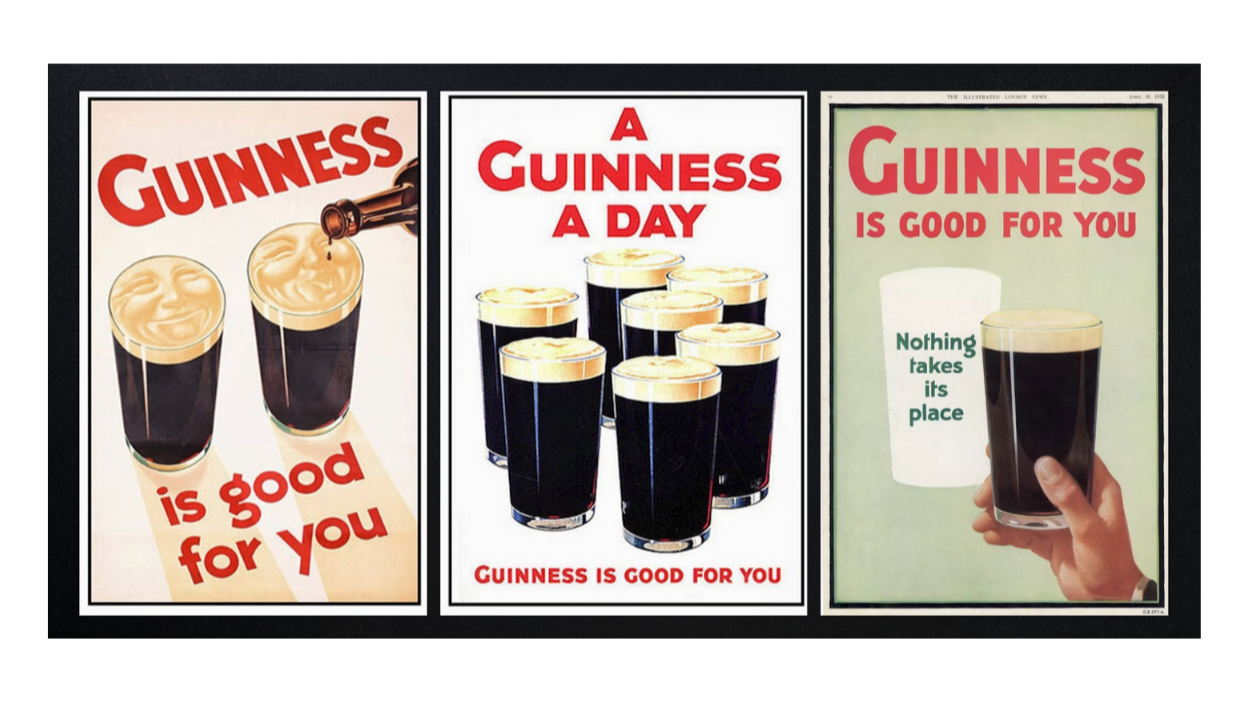
Guinness is a legacy beer brand defined by its cultural impact.
For generations, the brand has championed the saying “Guinness is good for you.” But what does “good for you” actually mean to drinkers today?
Problem
For Gen Z, alcohol is the definition of “bad for you.”
It’s not breaking news to say Gen Z has a negative perception of alcohol. Globally, two-thirds of 18–34-year-olds say drinking is “unhealthy” because it means:
Empty calories.
Restless sleep.
Digital blackmail.
Impending hangxiety.
Ironically, they are making it worse.
Solitary drinking has steadily increased. But today, it’s at an all-time high with roughly 40% of Gen Z drinkers report drinking alone.
National Library of Medicine
Gen Z believes alcohol is bad for them, but overlooks a bigger threat:
isolation.
Insight
We’ve lost what’s best for us: human connection.
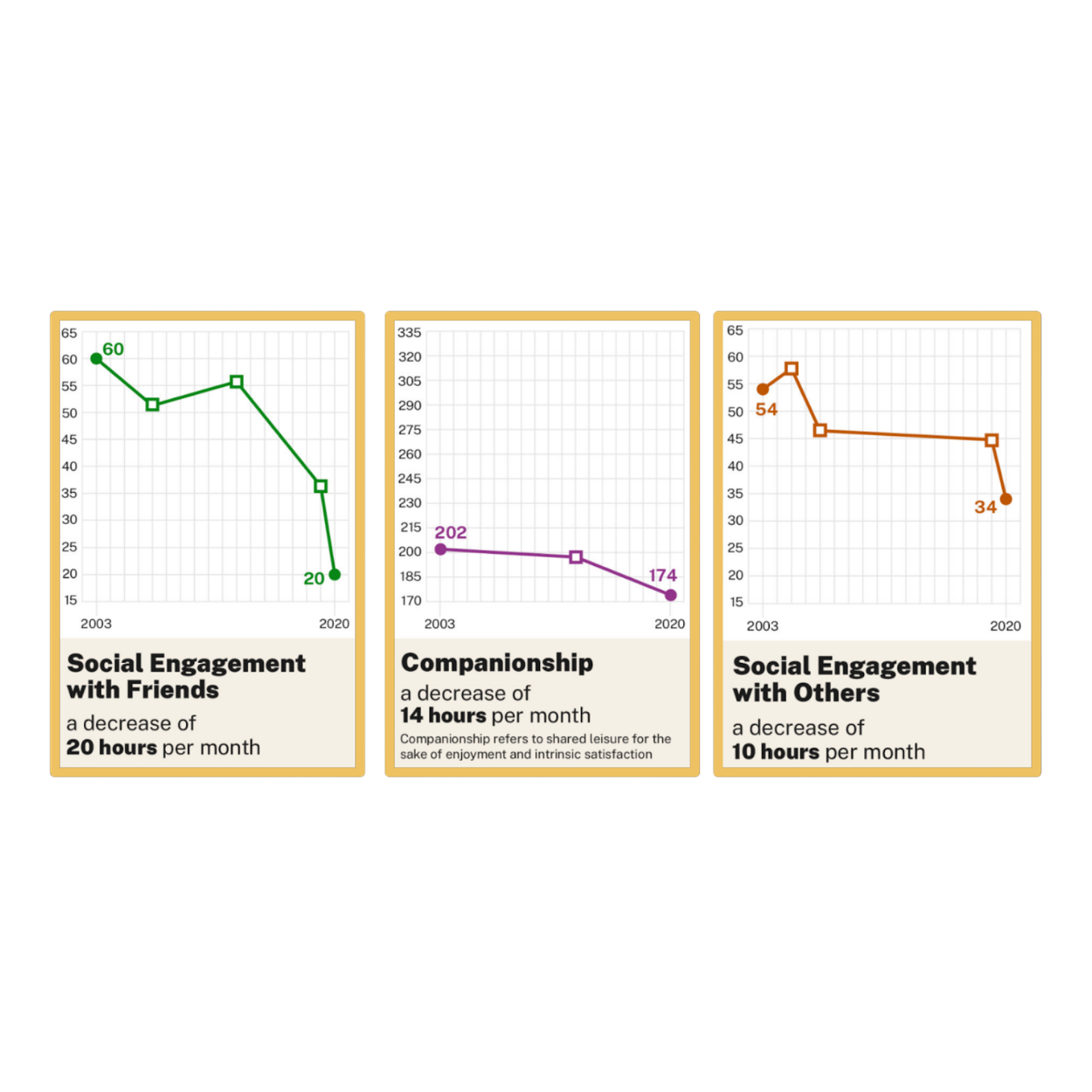
Humans are social creatures by nature. But over the past two decades, we’ve become less intentional with each other, letting our social lives slip down our priority list.
We trade one for the other:
“Let’s hang out.” — “Let me check my calendar.”
“Come over.” — “Let’s plan something soon.”
“How are you?” — “Wish we had time to catch up.”
“Wanna grab a drink?” — “Go on without me.”

Where Gen Z meets beer.
As social creatures, human connection is essential to our wellbeing.
As a social beer, Guinness creates space for it with an intentional 119-second pour.
Strategy
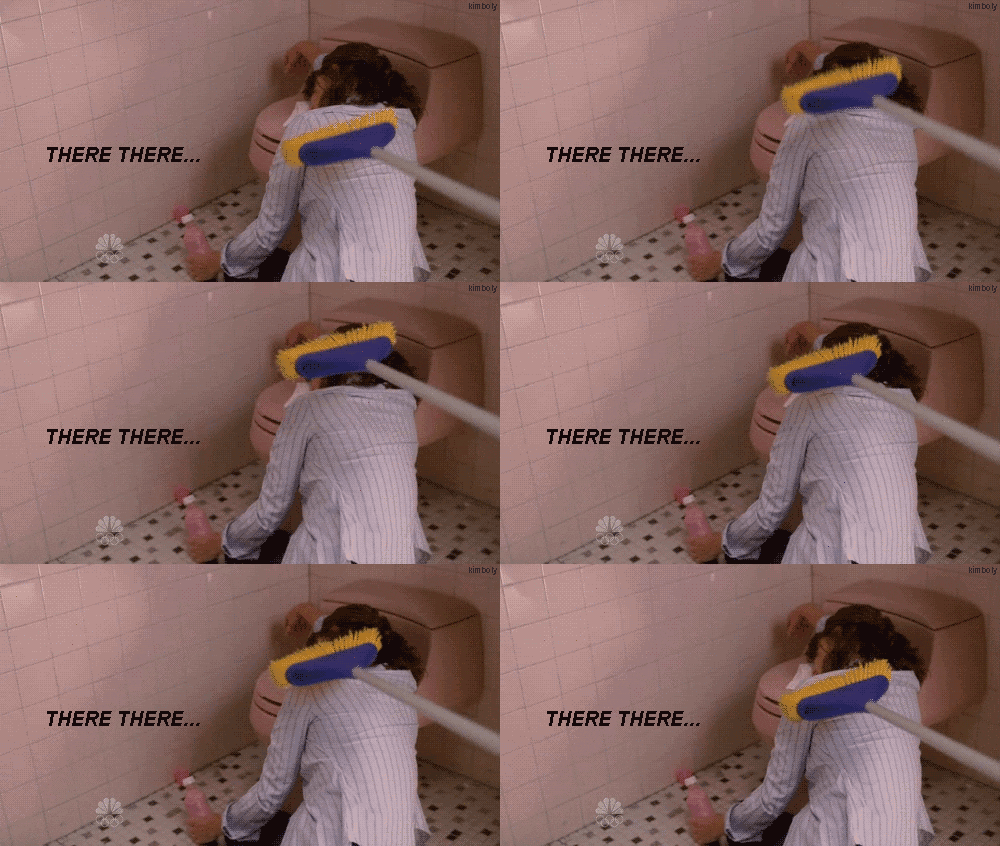
Show how Guinness’ “good for you” looks like nurturing your social nature.
By recontextualizing its legacy in Gen Z’s drinking habits, Guinness can show up as more than a beer. It can be 119 seconds of social connection.
Creative Concept
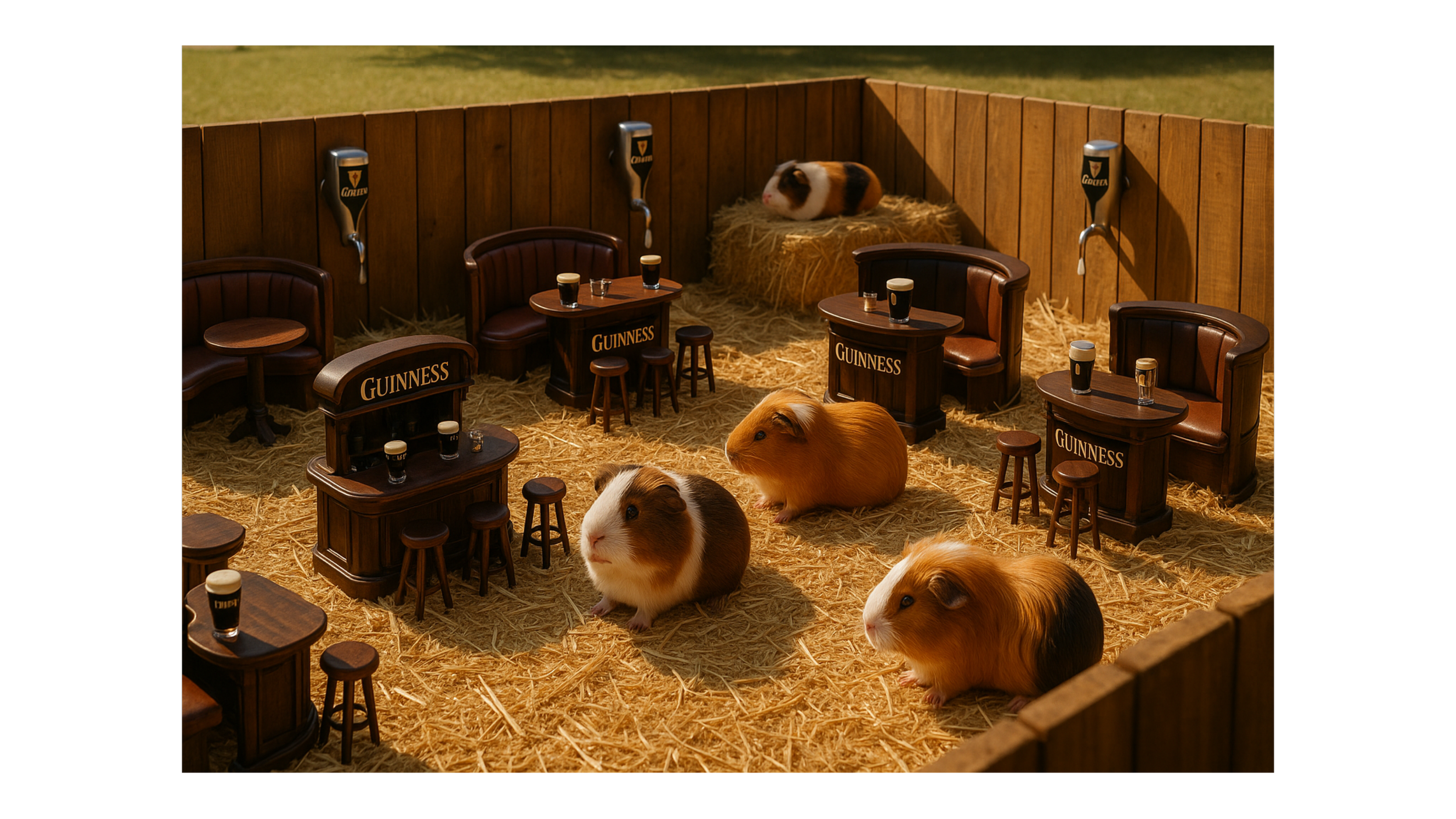
Guinness Pigs:
We’re all Social Creatures
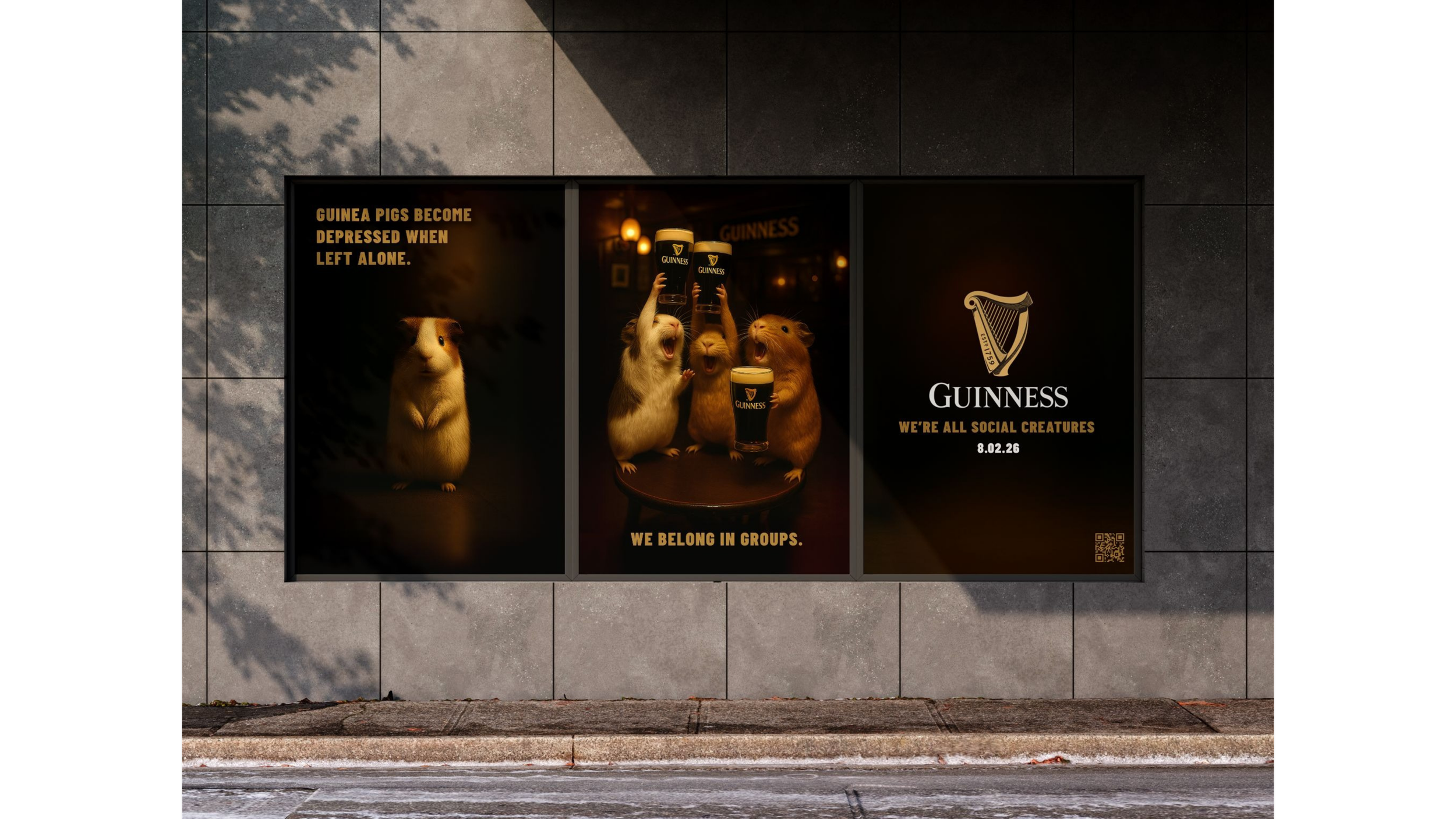
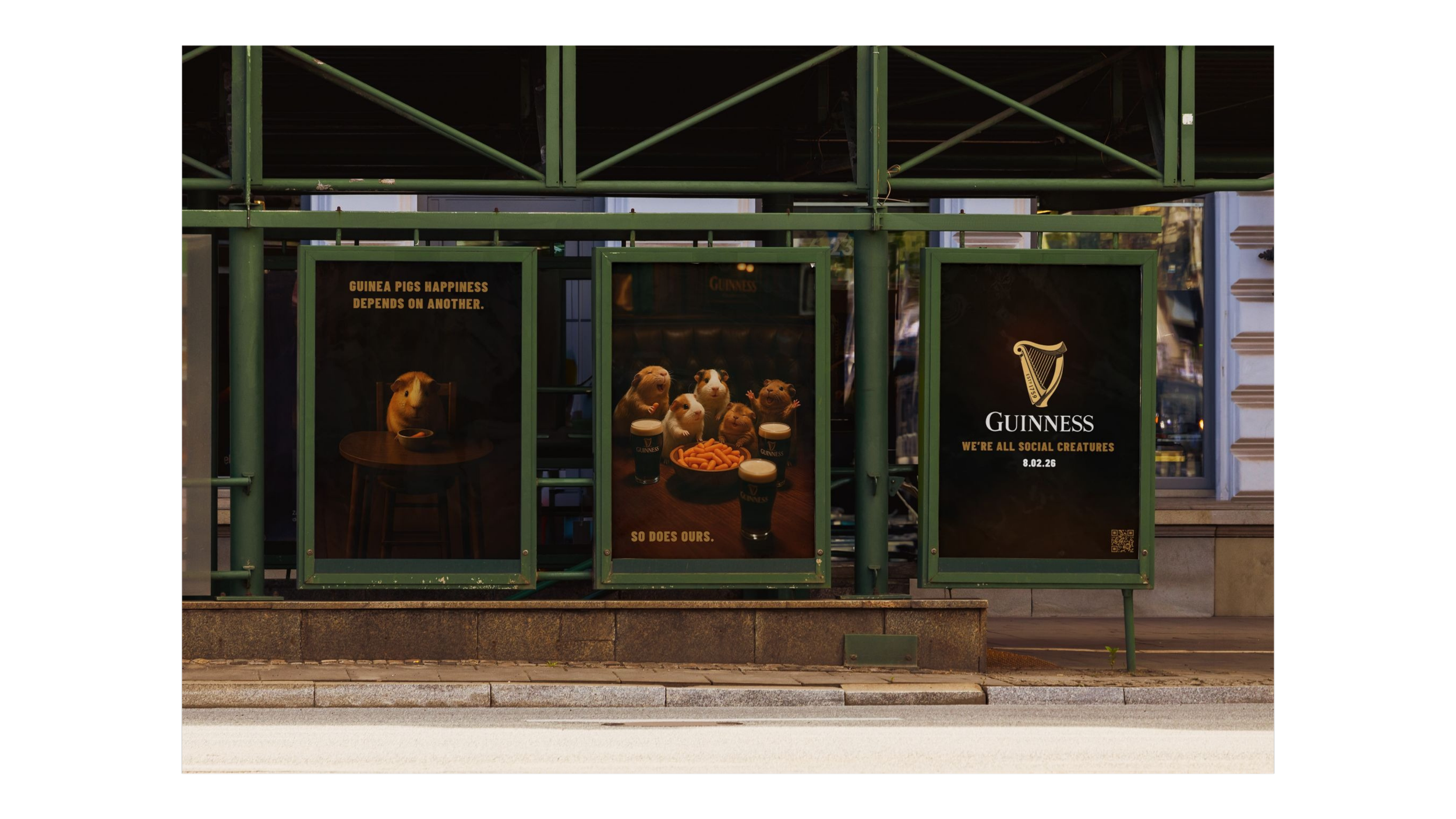
In Switzerland, it’s illegal to own just one guinea pig. Why? Because they’re social creatures who need companionship to survive.
Turns out, humans aren’t so different.
OOH Promotion
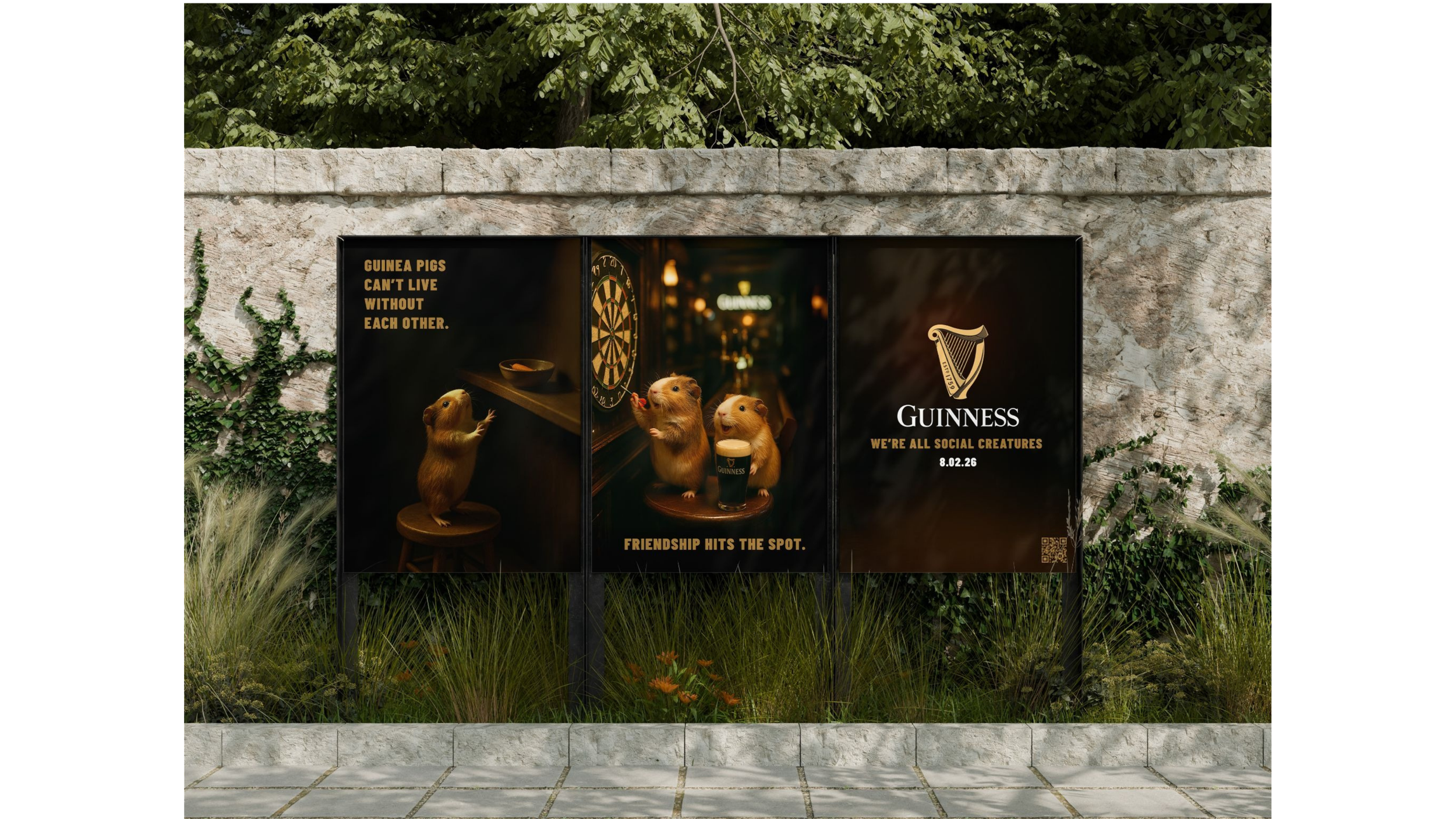
Introducing Guinness’s new (adorable) ambassadors, Guinness Pigs as a challenge to nurture your social nature.
Brand Activation
What:
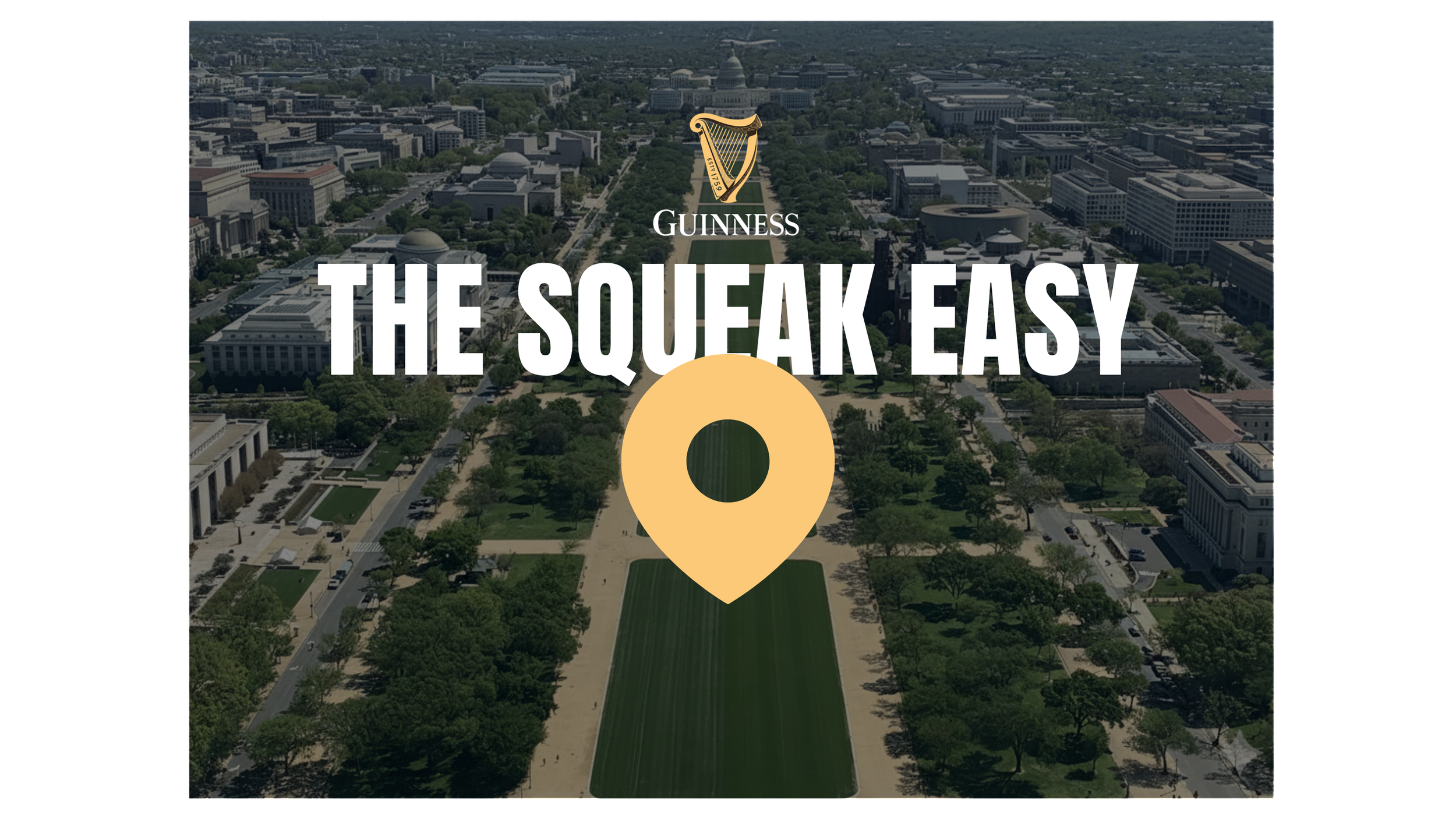
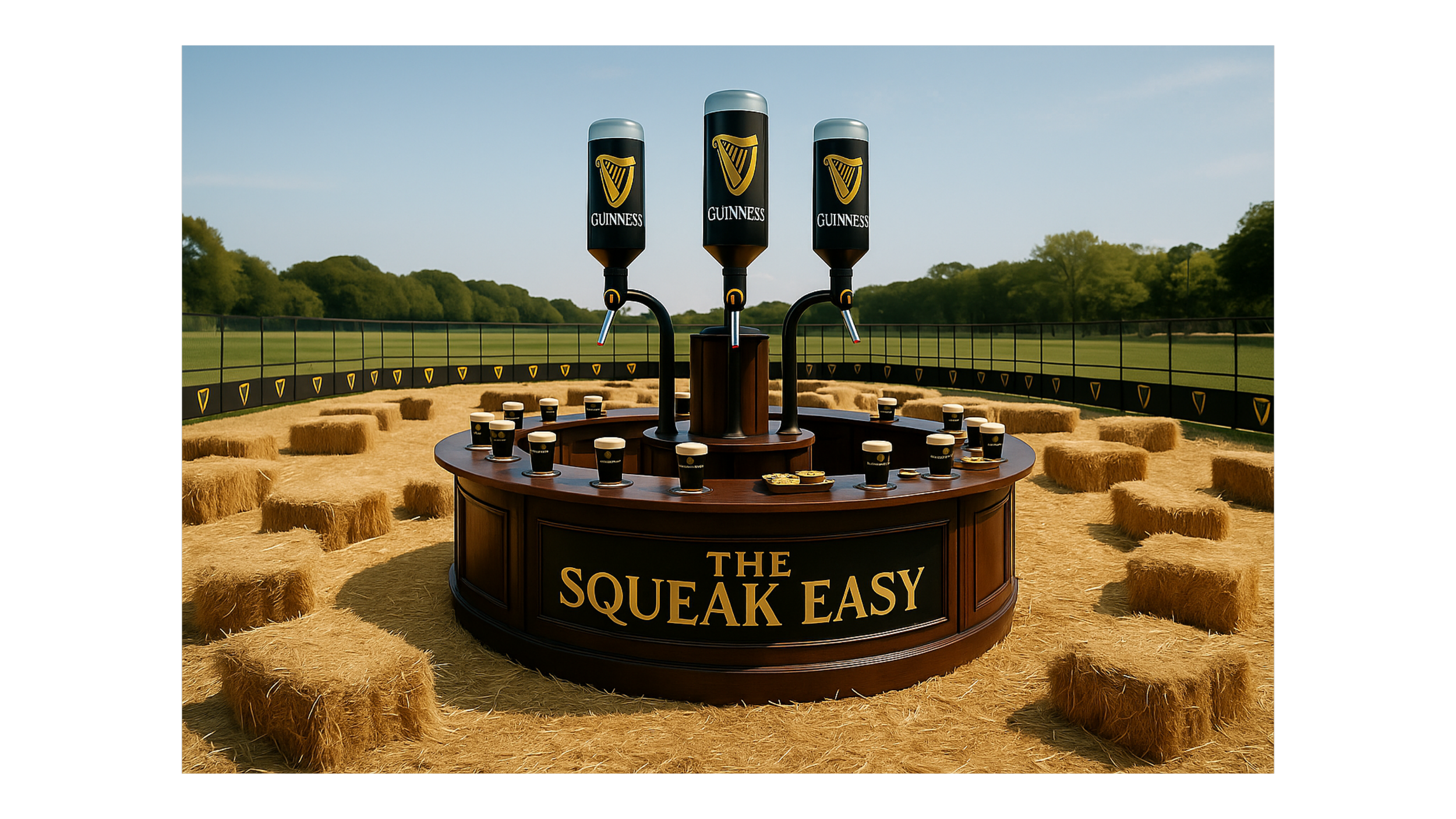
The Squeak Easy:
A Guinness popup where humans can visit a human sized guinea pig enclosure to pull pints and prioritize social connection. Oh and yes, there will be guinea pigs.
Where:
“The loneliest city in America,” Washington DC
When:
National Friendship Day, August 2, 2026
Why:
All event proceeds will be donated to the Foundation of Social Connection